Concrete Finishes That Stand Up to Wisconsin’s Freeze-Thaw Cycles
A Spring Guide to Choosing Concrete Surfaces That Handle Moisture, Temperature Swings, and Long-Term Wear
April is when a lot of Wisconsin homeowners start thinking about outdoor projects again. Patios, walkways, driveways, and slabs are back on the radar as the snow clears and the ground thaws. But this is also the right time to be realistic about one thing: not every concrete finish holds up the same once Wisconsin weather gets involved.
In southern Wisconsin, concrete does not just need to look good on install day. It needs to stand up to repeated freeze-thaw cycles, spring moisture, snowmelt, and the wear that comes from long winters and fluctuating temperatures. That is exactly why finish selection matters. M & W Exteriors already covers this from a style-and-function angle in their August post, How to Choose the Right Finish for Your Concrete Flatwork, where they highlight broom, exposed aggregate, stamped, smooth trowel, and colored or stained concrete as common options for Janesville-area homeowners.
This April guide goes deeper on one issue that matters most in Wisconsin: which finishes are best equipped to handle freeze-thaw stress over time.
Why Freeze-Thaw Cycles Are So Hard on Concrete
Concrete is durable, but it is not invincible. It is naturally porous, which means water can enter the surface. Once temperatures drop below freezing, that trapped moisture expands. When this happens over and over again, the concrete starts to break down. M & W Exteriors’ winter concrete care article points to the most common results: scaling, flaking, hairline cracks that widen over time, pitting, spalling, and gradual structural weakening beneath the surface.
That is the real problem with Wisconsin weather. It is not just the cold. It is the constant cycling between wet, frozen, thawed, and wet again.
If you are planning a new slab this spring, the finish you choose can help reduce water retention, improve traction, and support long-term durability.
The Best Concrete Finishes for Wisconsin Freeze-Thaw Conditions
Not all finishes perform equally when exposed to the elements. Some are better at shedding water, some offer stronger slip resistance, and some require more maintenance to stay protected.
Broom Finish: The Practical Workhorse
For many Wisconsin driveways, sidewalks, and walkways, a broom finish remains one of the smartest choices.
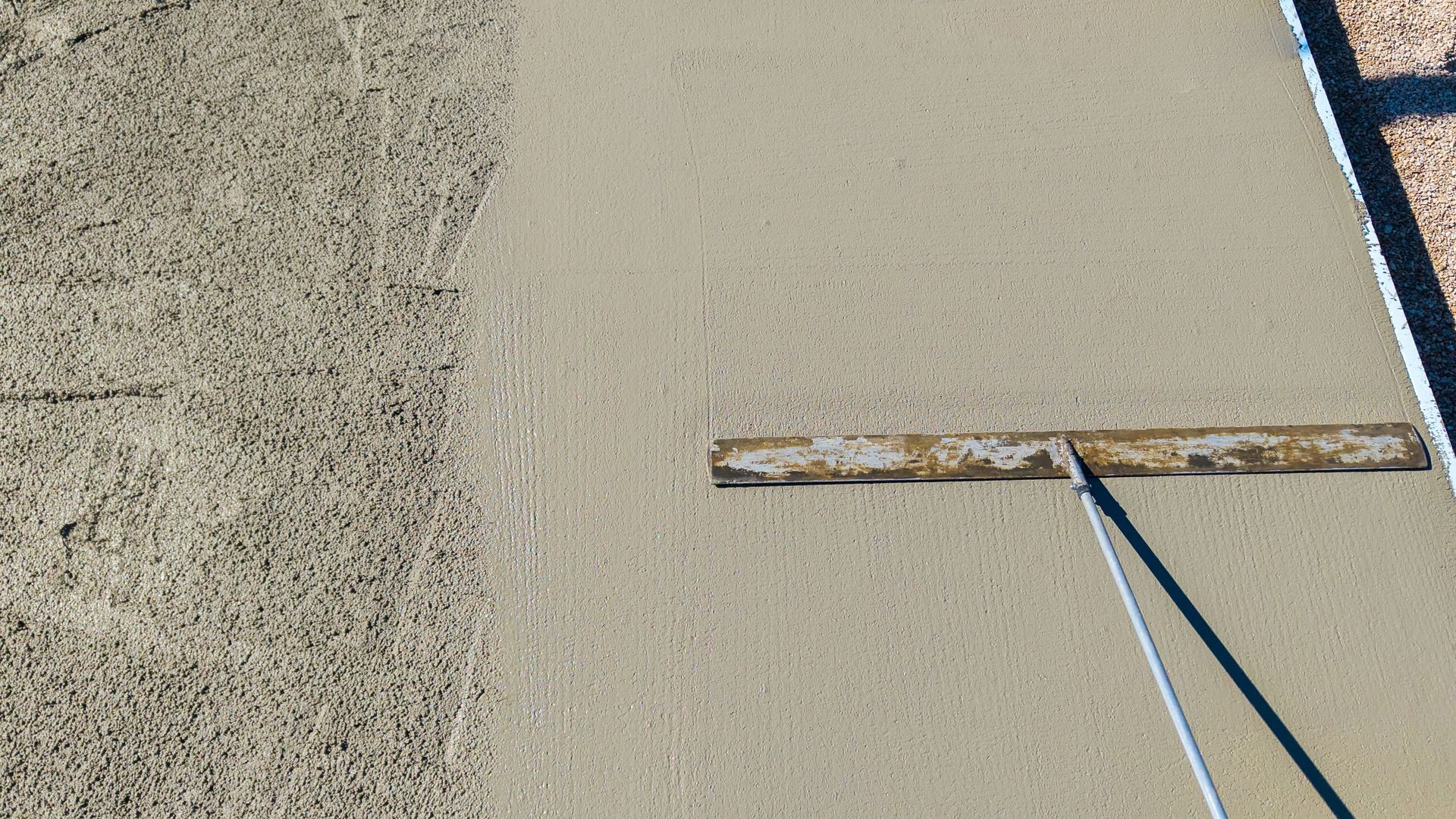
This finish creates a lightly textured surface that improves traction, which is critical during rainy spring weather and icy conditions later in the year. It is also a practical choice because it does not try to do too much. It provides a dependable surface without the added maintenance demands of more decorative finishes. M & W Exteriors specifically notes broom finish as classic, cost-effective, and slip-resistant, making it a strong fit for driveways and sidewalks.
For homeowners who want reliability first, broom finish is hard to beat.
Exposed Aggregate: Strong Texture with Visual Appeal
Exposed aggregate is one of the better decorative options for Wisconsin climates because it combines texture with durability.
By revealing the decorative stone within the slab, this finish creates a more textured surface that can provide better grip than smoother alternatives. It also tends to disguise minor surface wear better over time than a plain smooth finish. In the August M & W Exteriors blog, exposed aggregate is described as a natural, textured look that works well for homeowners who want a more decorative finish without sacrificing function.
That said, exposed aggregate still needs proper installation and sealing. A good finish does not rescue poor workmanship.
Stamped Concrete: Attractive, but More Demanding
Stamped concrete can look great. It can mimic higher-end materials like stone, brick, or tile and instantly elevate the look of a patio or outdoor entertaining area. But in a freeze-thaw climate, homeowners need to understand the tradeoff.
More decorative surfaces often require more upkeep. M & W Exteriors notes that high-end stamped patterns may require more maintenance to keep looking their best. If the slab is not properly finished, sealed, and pitched for drainage, decorative surfaces can become more vulnerable to wear and moisture-related damage.
Stamped concrete is not a bad option in Wisconsin. It just needs to be chosen with open eyes. If appearance is the top priority, maintenance has to stay part of the plan.
Smooth Trowel Finishes: Usually the Wrong Call for Exposed Wisconsin Flatwork
A smooth trowel finish has a clean, modern look, but for outdoor flatwork in Wisconsin, it is often not the best fit.
Smoother surfaces can become slick when wet, and they generally do less to help with traction in freezing or rainy conditions. M & W Exteriors positions smooth trowel finishes as a better fit for interior slabs or covered outdoor spaces rather than exposed flatwork that has to deal with full weather exposure.
For uncovered driveways, sidewalks, and walkways, there are tougher and safer choices.
Finish Alone Is Not Enough
This is where a lot of homeowners get it wrong. They focus on the visible finish and ignore the installation details that actually determine whether the slab lasts.
M & W Exteriors’ winter concrete article makes that point clearly. Freeze-thaw resistance starts long before winter arrives. Proper finishing techniques, avoiding over-working the surface, creating a dense top layer, promoting drainage, and sealing the slab all play a direct role in long-term durability. The same article also stresses that standing water is one of concrete’s biggest enemies and identifies improper pitch, settled areas, and poor grading as frequent causes of damage.
So the right question is not just, “What finish do I want?” It is:
What finish makes sense for my space, my traffic level, and Wisconsin weather, and will it be installed correctly from the start?
That is a much better standard.
Spring Is the Right Time to Plan Smarter
April is a strong time to schedule concrete work because it gives homeowners the chance to think beyond appearance and plan for real seasonal performance. Spring projects should be built with next winter in mind, not just summer curb appeal.
If you are replacing or adding flatwork, think about how the space will function in all four seasons:
- Will it hold standing water after rain?
- Will it become slick in cold weather?
- Will it need more upkeep than you want to deal with?
- Will the finish still look good after repeated winters?
Those questions matter more than chasing the most decorative option.
What M & W Exteriors Can Help With
M & W Exteriors offers concrete services for residential and commercial properties, including driveways, walkways, patios, and foundations, and also provides repair and maintenance for cracking, chipping, and wear over time. That makes them a practical local resource for homeowners who need more than a generic recommendation.
For readers who are still comparing styles, the best internal next step is to review How to Choose the Right Finish for Your Concrete Flatwork. For readers already planning a project, they can learn more about Concrete Services or contact M & W Exteriors for a free estimate.
Final Thoughts
When it comes to concrete in Wisconsin, the finish is not just a design choice. It is a performance decision.
Broom finishes and exposed aggregate are often strong choices for surfaces that need traction and durability.
Decorative finishes like stamped concrete can work well too, but only when homeowners are willing to stay on top of sealing and maintenance. Smooth finishes may look sharp, but they are usually better reserved for protected spaces.
The bottom line is simple: if your concrete has to survive Wisconsin freeze-thaw cycles, choose a finish that is built for real conditions, not just first impressions.